The importance of daily meditation for mental health and emotional balance
Why a Few Quiet Minutes a Day Could Change Your Mind
Americans are more stressed than ever. According to the American Psychological Association, over 75% of adults report experiencing significant stress in a given month, with anxiety and burnout topping the list of concerns. From packed commutes in Los Angeles to late-night work emails in New York, the pressure seems to follow people everywhere they go, leaving little room for mental recovery.
Amid this chaos, a simple practice is gaining traction across workplaces, schools, and living rooms nationwide. Daily meditation for mental health has moved from niche wellness trend to evidence-backed strategy for coping with modern life. Companies like Google and Nike have even introduced meditation rooms for employees, signaling that this is no longer just a fringe habit reserved for yoga studios.
But what makes this ancient practice so relevant today? The answer lies in both science and personal experience. Many practitioners describe an almost immediate sense of calm, while long-term users report deeper shifts in how they handle conflict, sleep, and even chronic pain.
What This Article Will Cover
- The proven benefits of meditation for mental health, including reduced anxiety and improved focus
- Simple meditation techniques for emotional balance anyone can start today
- The science behind how meditation improves mental well-being at a neurological level
- Why the importance of meditation for stress relief extends beyond the mat and into daily life
Research from institutions like Harvard Medical School shows that consistent practice can physically reshape brain regions linked to stress and emotional regulation. Brain scans of long-term meditators have revealed increased gray matter density in areas associated with memory and self-awareness, alongside a reduction in the amygdala, the region responsible for triggering fear and stress responses. This isn’t just relaxation—it’s measurable transformation.
Interestingly, some studies suggest that even short sessions, as little as ten minutes a day, can produce noticeable changes in mood and focus within a few weeks. This accessibility is part of what makes the practice so appealing to busy Americans who may not have time for hour-long retreats but can carve out a few quiet moments before work or after dinner.
Whether you’re a skeptic or a seasoned practitioner, understanding the real impact of a daily meditation practice could reshape how you approach mental wellness. Let’s explore what the research reveals and how you can apply it starting today, potentially transforming not just your mind, but your entire outlook on daily stress.
DISCOVER: Click here to learn about the importance of a balanced diet
# The Science Behind the Stillness: What Happens When You Sit Down and Breathe
Walk into any office break room in Austin or Chicago these days, and you might spot someone with their eyes closed, headphones in, sitting quietly for five minutes before diving back into spreadsheets. This isn’t laziness. It’s a growing recognition that daily meditation for mental health isn’t just a wellness buzzword—it’s becoming a practical tool for surviving the modern grind.
The Numbers Tell a Compelling Story
Skeptics often ask: does this actually work, or is it just another self-care trend destined to fade? The data suggests otherwise, and the sheer volume of research pouring in from major universities and hospitals makes it difficult to dismiss.
A landmark study published in JAMA Internal Medicine found that mindfulness meditation programs produced moderate improvements in anxiety, depression, and pain—comparable to what antidepressants can achieve for some individuals. That’s a significant claim, especially for a practice that costs nothing and requires no prescription, no insurance approval, and no trip to the pharmacy.
Consider these findings from recent research:
- Participants in an eight-week mindfulness program showed a 22% reduction in anxiety symptoms, according to a study from Johns Hopkins University
- Regular meditators report falling asleep faster and experiencing fewer nighttime awakenings, based on sleep-quality research published in JAMA Internal Medicine
- Workplace meditation programs have been linked to reduced burnout rates among employees in high-stress industries like healthcare and finance
- Some corporate wellness initiatives report measurable drops in sick days and healthcare claims after introducing structured mindfulness training
These aren’t isolated findings. They’re part of a broader pattern showing that the benefits of meditation for mental health extend far beyond simply “feeling calmer” after a session. Hospitals from California to New York are now incorporating mindfulness-based stress reduction programs into patient care, treating meditation less like a fringe practice and more like a legitimate clinical tool.
It’s Not Magic—It’s Neuroscience
So how exactly does sitting quietly rewire something as complex as human emotion? The answer involves a mix of biology, repetition, and a surprising amount of measurable physical change inside the brain itself.
When you practice meditation techniques for emotional balance, you’re essentially training your brain’s response system the same way athletes train muscles. Cortisol, the body’s primary stress hormone, tends to drop measurably after consistent practice. At the same time, activity in the prefrontal cortex—the region responsible for decision-making and emotional regulation—increases, while the amygdala, which governs fear and threat response, often becomes less reactive over time.
This is part of how meditation improves mental well-being on a biological level. It’s not about achieving some mystical state of enlightenment. It’s about giving your nervous system a chance to reset, day after day, until that calmer baseline becomes your new normal rather than a temporary escape.
For many Americans juggling deadlines, childcare, and financial pressures, that reset might be the missing piece they didn’t know they were searching for. Researchers continue to explore how long-term practitioners’ brains physically differ from non-meditators, and early imaging studies suggest changes in gray matter density within just eight weeks of consistent practice—raising even more questions about what a few quiet minutes a day could mean for long-term mental resilience.
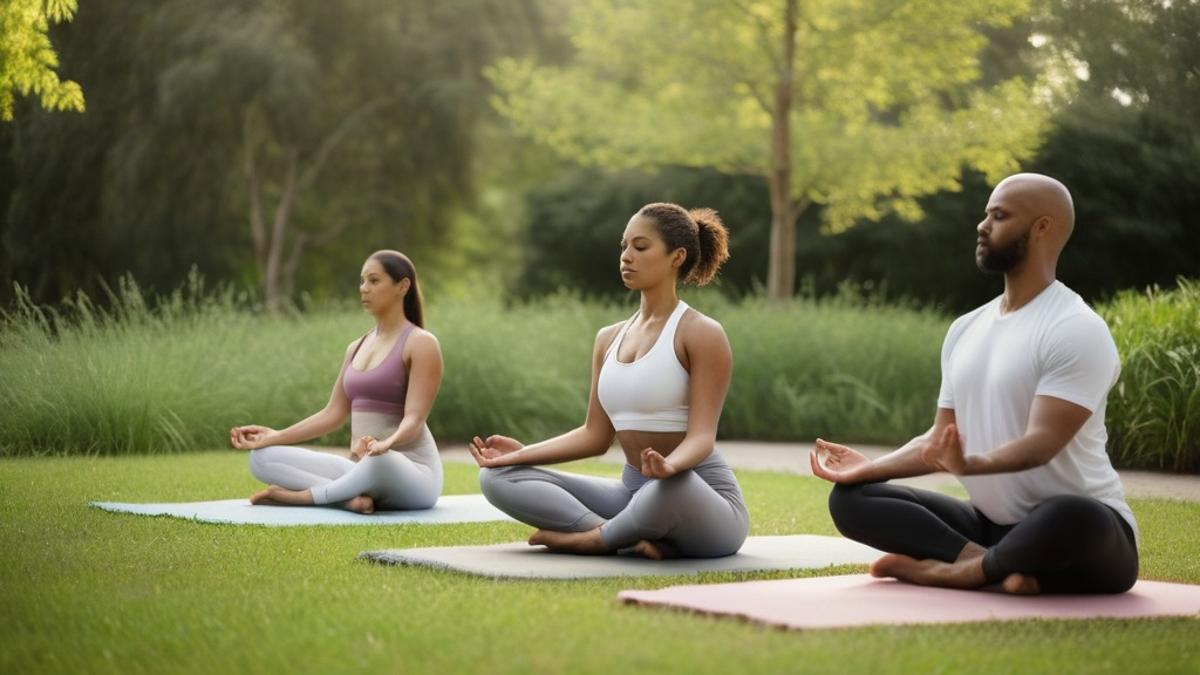
Key Aspects of Daily Meditation for Mental Health and Emotional Balance
Understanding the benefits of meditation for mental health becomes clearer when broken down into specific practices and their measurable outcomes. Research from institutions like Harvard and Johns Hopkins reveals that consistent practice reshapes brain structure, particularly in regions linked to stress response and emotional regulation. Below is a concise breakdown of core aspects tied to meditation techniques for emotional balance and their real-world impact.
| Key Aspect | Impact & Benefits |
|---|---|
| Cortisol Reduction | Lowers stress hormone levels by up to 25% after consistent practice |
| Emotional Regulation | Strengthens amygdala control, reducing reactive anger and anxiety |
| Sleep Quality | Improves sleep onset time and reduces insomnia symptoms |
| Focus & Clarity | Enhances attention span through mindful breathing exercises |
| Stress Relief | Demonstrates the importance of meditation for stress relief in daily routines |
These findings highlight how meditation improves mental well-being through measurable physiological changes rather than abstract promises. A daily meditation practice as brief as ten minutes can trigger these shifts, making it accessible even for those with demanding schedules. The next section explores specific techniques that maximize these outcomes.
DISCOVER MORE: Click here to learn about the importance of a balanced diet
Not everyone has an hour to spare for a silent retreat, and honestly, most people don’t need one. The importance of meditation for stress relief isn’t tied to how long you sit—it’s tied to how consistently you show up. That distinction changes everything for someone juggling a 9-to-5 job, a commute, and a household to manage. In fact, the growing body of research on mindfulness suggests that brief, frequent sessions often outperform sporadic marathon attempts at inner peace.
Different Approaches for Different Minds
There’s no single “correct” way to meditate, which surprises a lot of newcomers expecting rigid rules. Different meditation techniques for emotional balance work better for different personalities and lifestyles, and experimenting with a few is often the fastest path to finding one that sticks. What calms a data analyst in Seattle might feel completely foreign to a construction worker in Texas, and that’s perfectly normal.
- Body scan meditation — useful for people who carry stress physically, guiding attention slowly from head to toe to release tension
- Loving-kindness meditation — focused on directing goodwill toward oneself and others, shown in some studies to reduce symptoms of social anxiety
- Breath-focused meditation — the most common entry point, often taught in apps like Headspace or Calm, ideal for beginners who feel overwhelmed by racing thoughts
- Walking meditation — a practical option for people who find stillness uncomfortable, popular among runners and hikers across states like Colorado and Oregon
Interestingly, researchers at the University of Wisconsin-Madison found that even ten minutes of guided breath-focused practice produced measurable shifts in heart rate variability, a key marker of stress resilience. That’s roughly the length of a coffee break, which raises an intriguing question: how much of modern burnout could be softened by habits this small?
Real People, Real Routines
Take the example of a nurse in Phoenix working twelve-hour hospital shifts. She started using a five-minute breathing exercise before clocking in, not expecting much. Within a few weeks, she noticed she wasn’t snapping at coworkers during chaotic moments—small, but telling, evidence of how meditation improves mental well-being in high-pressure environments where every minute counts.
Similarly, a school teacher in Ohio began a daily meditation practice during her lunch break, sitting in her parked car for ten minutes before afternoon classes. She described it as “hitting a reset button” rather than escaping her responsibilities. A delivery driver in rural Georgia reported something similar, using red-light stops at intersections as brief moments to breathe deeply instead of scrolling through his phone.
These aren’t dramatic transformations involving mountaintop retreats or monastic silence. They’re small, replicable habits woven into ordinary American schedules, proving that meaningful change doesn’t require perfect conditions—just repetition and intention.
What the Apps Won’t Always Tell You
Meditation apps have exploded in popularity, generating hundreds of millions in revenue nationwide, but experts caution against relying solely on guided sessions forever. Eventually, many practitioners benefit from learning to sit with silence, without a soothing voice narrating every breath.
That transition—from guided practice to independent stillness—is often where the deepest benefits of meditation for mental health begin to surface, according to mindfulness instructors who’ve watched students progress over months and years. Some describe this shift as uncomfortable at first, almost like removing training wheels, yet ultimately more rewarding than any app notification could ever be.
The Bigger Picture on Mental Stillness
Zoom out far enough, and a clear pattern emerges: daily meditation for mental health isn’t a trend confined to yoga studios or wellness influencers. It’s showing up in hospital break rooms, parked cars, and traffic stops across the country, adapted by everyday people solving everyday stress.
That’s arguably the most compelling part of this story. The science backs it up, sure—reduced cortisol levels, improved heart rate variability, sharper emotional regulation. But the real proof lives in the nurse who stops snapping at coworkers, the teacher who resets before her next class, the driver who breathes instead of scrolling.
Consistency Over Perfection
None of these routines required special equipment, silent retreats, or hour-long commitments. They required five or ten minutes, repeated often enough to matter. That’s the quiet lesson behind the importance of meditation for stress relief: small, imperfect efforts compound into real change when practiced consistently.
Choosing among various meditation techniques for emotional balance matters less than simply starting somewhere and adjusting along the way.
Where to Go From Here
Anyone curious about how meditation improves mental well-being doesn’t need to overhaul their entire schedule tomorrow. Starting with three minutes, at a stoplight or before checking email, is a reasonable first step.
The broader question worth sitting with is this: in a culture obsessed with optimization, could the simplest, cheapest tool—just breath and attention—be the one most people overlook? Given the mounting evidence, it seems worth finding out firsthand.
Frequently Asked Questions
How long should I meditate each day to see benefits for my mental health?
Research suggests that even 10 to 15 minutes of daily meditation can lower stress and improve mood over time. Beginners can start with 5-minute sessions and gradually increase duration as consistency becomes easier. What matters most is daily practice rather than session length, since regularity builds the neural pathways associated with emotional regulation.
Can daily meditation really help with anxiety and depression symptoms?
Yes, studies show that mindfulness-based meditation can reduce symptoms of anxiety and depression by lowering activity in the brain’s stress-response centers, like the amygdala. It also increases activity in areas linked to emotional regulation, such as the prefrontal cortex. However, meditation works best as a complement to, not a replacement for, professional treatment when symptoms are severe.
What is the best time of day to meditate for emotional balance?
Many people find morning meditation helpful because it sets a calm, focused tone before the day’s stressors begin. Others prefer evening sessions to process emotions and unwind before sleep. The best time is ultimately whenever you can consistently fit it into your schedule, since daily practice matters more than the specific time of day.
How does daily meditation physically change the brain over time?
Consistent meditation practice has been linked to increased gray matter density in regions associated with memory, empathy, and emotional regulation. It can also shrink the amygdala, the brain’s fear center, reducing reactivity to stress. These changes typically become measurable after eight weeks or more of regular practice, according to neuroimaging studies.
What type of meditation is most effective for reducing daily stress?
Mindfulness meditation and body-scan techniques are among the most researched methods for reducing everyday stress and promoting emotional balance. Breath-focused meditation is also effective because it activates the parasympathetic nervous system, calming the body’s stress response. The best approach is often the one you’ll actually stick with consistently, so experimenting with different styles is encouraged.

Linda Carter
Linda Carter is a writer specializing in healthy habits and balanced living. With extensive experience helping readers build sustainable routines, she shares practical guidance on nutrition, physical activity, quality sleep, stress management, and emotional well-being. Her goal is to offer simple, accessible strategies that inspire people to care for their health and enjoy a more balanced life.